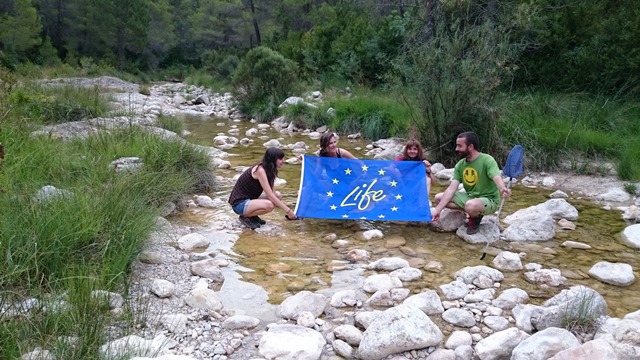

Implementing the Water Framework Directive to temporary rivers

NOTE! This site uses cookies and similar technologies.

For more information about the cookies we use and the reason for this message, see the following link: Learn more

I understand

The website of the F.E.M. Research Grup of University of Barcelona uses Cookies to enhance the user's navigation, load certain features based on technologies offered by Google such as Google Maps, or offer statistics using Google Analytics.

This message appears to comply with current legislation on data protection dictates by Directive 2009/136/CE. It says that users of a website should be informed and able to accept the use of cookies in an easy way.

Once permitted for use of "I understand" button, the message will not appear again. In case you want to decline cookies again, it must be done by modifying the properties of the web browser.

A+ A A-

From flowing to dry conditions: first results on the aquatic states

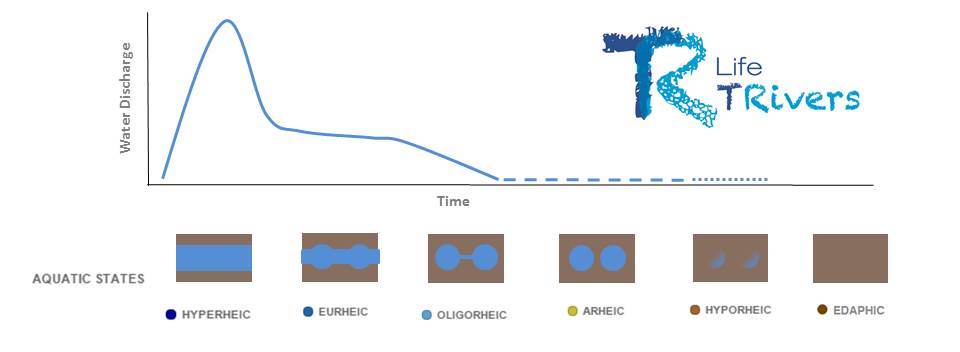
During the last 6 months we have been visiting our study sites regularly (every six weeks) in order to capture the different hydrological conditions and aquatic states of streams from spring to end of summer, and sample the aquatic communities living therein. We observed that many temporary streams with abundant flowing water in spring (Eurheic state) progressively dried out, passing through a stage with a succession of pools connected by a tiny river flow (Oligorheic state), disconnected pools (Arheic state) and, finally, until they got completely dry (Hyporheic state) . As shown in the maps, this included natural temporary streams, such as Talamanca, Pineda, Monlleó and Cérvol, but also permanent ones affected by water abstraction, such as Guadazaón. Other streams did not dry out and kept disconnected pools all along the summer, and reconnected with the first rains in September. This was the case of the Glorieta and Tossa streams, and the Matarranya River.

Click on the dots to obtain more information: to know the river’s name and its hydrological flow regime, and see a picture of it.

FiguraEstats Aquàtics

Brief description of the different aquatic states that a temporary river may go through. Figure: N.Cid.

Some streams that in natural conditions would be temporary (intermittent, seasonal or ephemeral) suffered from “perennialization” mainly due to the effluents from the sewage treatment plants. That is, water flowing continuously where it’s not supposed to. These changes alter the natural temporary water regime of the river, and, in most cases, contribute to the impoverishment of biological communities due to pollution. This was the case of Torrent del Puig, Congost and San Miguel Rivers.

Ephemeral streams did not have water at any time during our visits and therefore they presented a Hyporheic state during all the sampling period. Flow in these systems is only originated during heavy rains of autumn or spring and therefore it is characterized by pulses, which did not occur during our samplings. None of our streams was sampled under a hyperrheic state.

In contrast, permanent streams with no significant hydrological impacts, such as Aigua d’Ora and Algars, and Cabriel, only the Eurheic and Oligorheic states were observed.

Now we are waiting to come back again when all our temporary streams will be rewetted, to be able to record duration of the Hyporrheic state. Once biological data will be processed, this will help us analysing how communities respond to different severity levels of flow intermittency.

Related articles: World Rivers Day: raising awarenes for the importance of temporary rivers

WORLD RIVERS DAY 2015 

Temporary rivers: a neglected reality


Do you want to help us raising awareness of temporary rivers?

Use your Twitter account and tweet pictures of temporary rivers you know with the hashtag #riversday15 and mentioning @LifeTRivers and @oneriverworld!!!

River researchers have forgotten temporary rivers since many years. In front to large, tropical or temperate rivers, temporary rivers carry a very low amount of water to the oceans. In most of them there are no long-term flow records. They are usually known for both, the disaster that these rivers originate from time to time due to large precipitation events and, for just the contrary, the dryness of their riverbeds for a large part of the year. Many of these rivers are located in Mediterranean climate areas or semi-arid areas of the world, just where water scarcity threatens human civilizations. Some temporary rivers are the result of dramatic water abstraction and other just receive raw sewage or sewage waters coming from water treatment plants.

However, temporary rivers hold an enormous variety of life, sometimes with incredible life histories. One amazing example is found in some Trichoptera species whose adults aestivate in caves when rivers are dried in summer, and return to them with the first autumn rains. Another incredible example can be found in several species that have strategies to survive in the dry riverbeds and reappear also with the first rains. Or the unique crabs and snails found in permanent pools in Australia that may remain isolated several years from the river. In some cases temporary rivers may be more diverse that permanent ones, because they contain different communities along a year in accordance to the hydrological cycle.


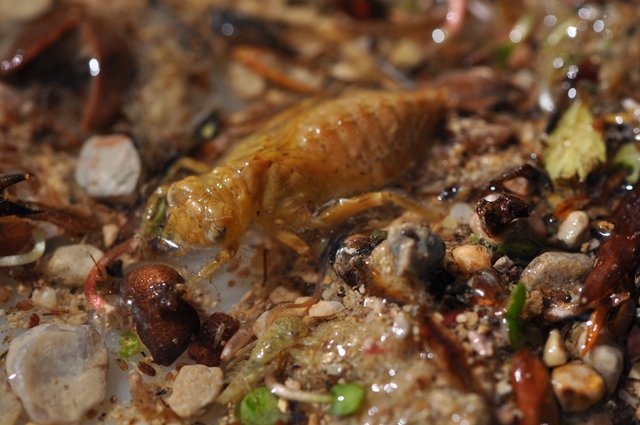
Gomphidae

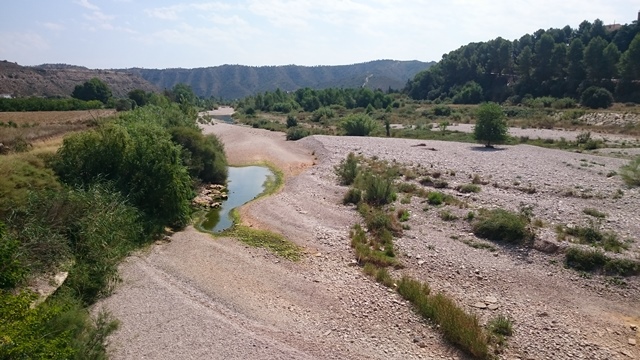
The cycle in a temporary river begins with the initial flooding just after the autumn rains (hyperheic state). After these floods, temporary rivers look like permanent streams, with sequences of riffles and pools, and may even hold a similar fauna (eurheic state). At the end of spring, river flow decreases and riverbeds can have a succession of pools connected by a tiny river flow (oligorheic state). When the flow stops the river is formed by several isolated pools, of different size and volume (arheic state) as you can see in the picture.

Matarranya

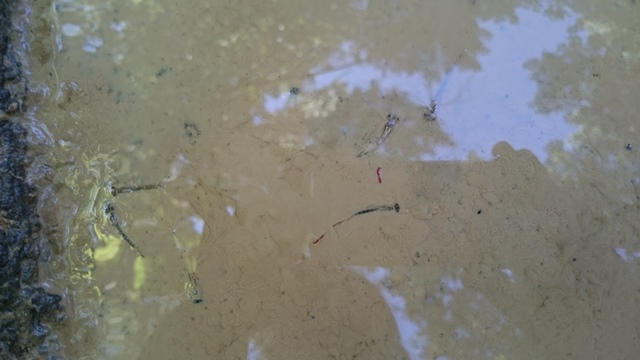
With the dominance of pools, the community changes completely and the bugs present in these pools are totally different from those found in spring. The pools may remain along summer until autumn when the flow returns, or may dry out, either with yet some aquatic fauna living buried in the wet alluvium (hyporheic state) or the dry riverbed being colonized by terrestrial invertebrates (edaphic state). At the end, the number of taxa along the year is higher than in permanent rivers. Thus, the hydrological conditions and biological communities in temporary rivers change with time but can be also very variable in space.

PozaGuadazaon


Different conditions can be found simultaneously in the same river network, indicating that temporary rivers are spatiotemporal shifting mosaics. Depending on the size of the pools, temperature or other factors, a temporary river may hold many different communities at the same time: permanent in the headwaters, intermittent in the mid parts and ephemeral in the lower parts (or vice-versa). All this mosaic may disappear due to human impacts (e.g. water abstraction, pollution), putting the temporary rivers and its splendid biodiversity at high risk.

In the next years, and due to global change, many permanent rivers may become temporal. Therefore, understanding how temporary rivers need to be preserved and managed is of vital urgent importance, especially in Mediterranean climates where temporary rivers are part of our landscape. This is the objective of the project TRIVERS a LIFE+ project that is currently going on and studying temporary rivers in Eastern Spain.


LIFE-TRivers small


In occasion of the World Rivers Day (worldriversday.com) we would like to send a message to river scientists and citizens of the world, to value and take care of such rivers to halt biodiversity loss: temporary rivers may be as beautiful as permanent ones and their sustainable use may provide important ecosystem functions and services to the inhabitants of large part of our world.


Links to other projects

EU LIFE Programme Projects

WATER RE-BORN - Artificial Recharge Innovative Technologies for the Sustainable Management of Water Resources WATER RE-BORN - Artificial Recharge Innovative Technologies for the Sustainable Management of Water Resources
INHABIT -Local hydro-morphology, habitat and RBMPs: new measures to improve ecological quality in South European rivers and lakes INHABIT -Local hydro-morphology, habitat and RBMPs: new measures to improve ecological quality in South European rivers and lakes
RIPARIA TER- Recovery of riparian habitatsof the Ter River RIPARIA TER- Recovery of riparian habitatsof the Ter River

EU Research and Innovation Programme Projects

MARS : Managing Aquatic ecosystems and water Resources under multiple Stress MARS : Managing Aquatic ecosystems and water Resources under multiple Stress
GLOBAQUA: Analyse the effects of multiple stressors on biodiversity and functioning of aquatic ecosystems GLOBAQUA- Analyse the effects of multiple stressors on biodiversity and functioning of aquatic ecosystems
BEWATER: Society Adapting to Global Change bewater
BioFresh: Biodiversity of Freshwater Ecosystems: Status, Trends, Pressures, and Conservation Priorities BioFresh: Biodiversity of Freshwater Ecosystems: Status, Trends, Pressures, and Conservation Priorities
Refresh: Adaptive Strategies to mitigate the impacts of climate change on European Freshwater Ecosystems Refresh: Adaptive Strategies to mitigate the impacts of climate change on European Freshwater Ecosystems
Mirage: Mediterranean Intermittent River ManAGEment Mirage: Mediterranean Intermittent River ManAGEment
Water Bodies in Europe: Integrative Systems to assess Ecological Status and Recovery Water Bodies in Europe: Integrative Systems to assess Ecological Status and Recovery

Other Projects

IRBAS: Intermittent River Biodiversity Analysis and Synthesis  http://www.irbas.fr/

Resources on temporary river management

Scientific papers

Nikolaidis, N.P.; Demetropoulou, L.; Froebrich, J.; Jacobs, C.; Gallart, F.; Prat, N.; Lo Porto, A.; Campana, C; Papadoulakis, V.; Skoulikidis, N.; Davy, T.; Bidoglio, G.; Bouraoui, F.; Kirkby, M.; Tournoud, M.G.; Polesello, S.;  Barberá, G.G.; Cooper, D.; Gomez, R.; Sánchez-Montoya, M.M.; Latron, J.;  De Girolamo, A.M. & Perrin, J.L. 2013. Towards sustainable management of Mediterranean river basins: policy recommendations on management aspects of temporary streams. Water Policy, 15: 830–849. doi: 10.2166/wp.2013.158

Gallart, F., Prat, N., García-Roger, E. M., Latron, J., Rieradevall, M., Llorens, P., Barberá, G. G., Brito, D., De Girolamo, A. M., Lo Porto, A., Buffagni, A., Erba, S., Neves, R., Nikolaidis, N. P., Perrin, J. L., Querner, E. P., Quiñonero, J. M., Tournoud, M. G., Tzoraki, O., Skoulikidis, N., Gómez, R., Sánchez-Montoya, M. M. & Froebrich, J. 2012. A novel approach to analysing the regimes of temporary streams in relation to their controls on the composition and structure of aquatic biota, Hydrol. Earth Syst. Sci., 16, 3165-3182, doi:10.5194/hess-16-3165-2012.