






Implementing the Water Framework Directive to temporary rivers
The website of the F.E.M. Research Grup of University of Barcelona uses Cookies to enhance the user's navigation, load certain features based on technologies offered by Google such as Google Maps, or offer statistics using Google Analytics.
This message appears to comply with current legislation on data protection dictates by Directive 2009/136/CE. It says that users of a website should be informed and able to accept the use of cookies in an easy way.
Once permitted for use of "I understand" button, the message will not appear again. In case you want to decline cookies again, it must be done by modifying the properties of the web browser.
On Tuesday 27 January, the first stakeholder meeting of the LIFE Trivers project took place at the headquarters of the Júcar Water Agency, in Valencia. The meeting gathered stakeholders and experts involved in temporary river management who analysed the difficulties in assessing the ecological status of temporary rivers.
The LIFE+ TRivers project will provide European river basin authorities and relevant stakeholders with an operationally tested software tool (TREHS, Temporary Rivers’ Ecological and Hydrological Status) which is designed to adequately implement the Water Framework Directive in this kind of water bodies. Based on a predictive model of the evolution of a river’s characteristics over time, the tool will detect if temporariness is due to natural characteristics of the river, to climatic changes or to human impacts. It is also expected to help managers select appropriate sampling dates and use the right methods to determine ecological status. The results will contribute significantly to improving the management of temporary rivers and to increasing their recognition in society and in policies related to water and biodiversity.
The LIFE+ TRivers project (Implementing the Water Framework Directive to temporary rivers: tools for the assessment of their ecological status) is co-funded by the European Union LIFE financial instrument and coordinated by the FEM research group at the University of Barcelona.
This section offers a selection of resources related with the project LIFE+ TRivers, including project publications, selected publications related with the management of temporary streams and links to other projects.
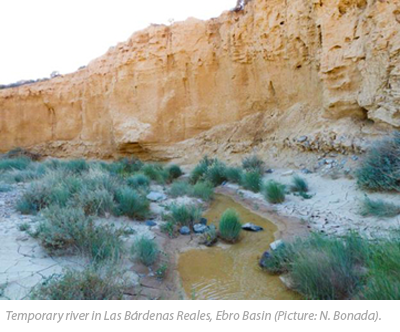
Temporary rivers are waterways that stop flowing on a regular basis or even completely dry up. Many streams in the Mediterranean Basin naturally dry up in the summer and are refilled after autumn storms, but they may remain dry for several years due to the variability in flow intensity from year to year.
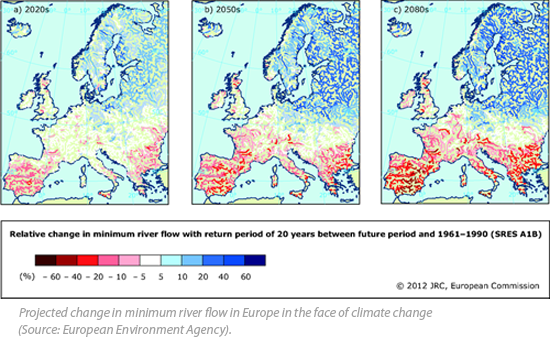
Temporary rivers are ecologically unique, they support key ecosystem functions and processes and they are extremely important in terms of biodiversity. At the same time they suffer from a wide range of human-induced impacts, including alterations in the natural flow regime, modifications to riverbanks and channels, excess nutrients and invasive species. Climate change predictions indicate that the Mediterranean region will face severe streamflow deficits, increasing the vulnerability of temporary rivers and causing permanent ones to become temporary.
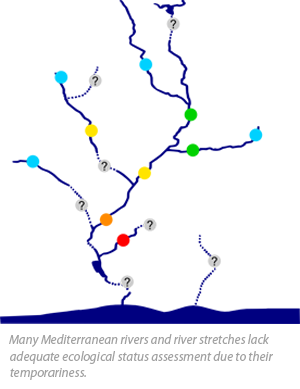
Although temporary rivers are very common in many regions of the world, there has been a general failure to understand, protect and manage this type of freshwater ecosystem. In Europe, the implementation of the Water Framework Directive has been unable to provide a solution to determine the ecological status of temporary waters. One of the main reasons for this is that assessment tools using biological indicators have been developed primarily for perennial streams and therefore are inadequate for rivers with complex hydrological regimes such as temporary rivers.